

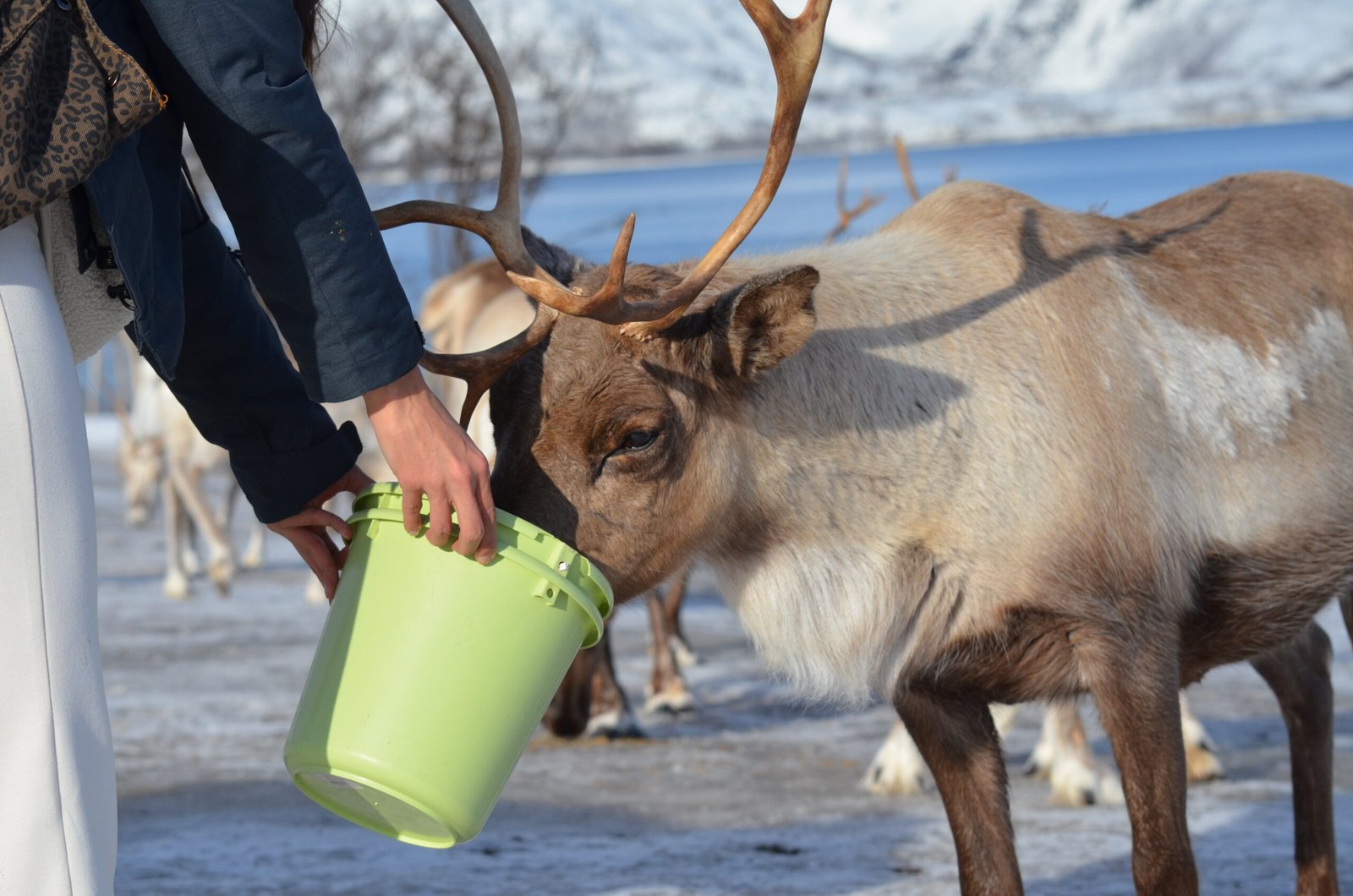
I still remember the exact moment the cold air hit my face as I stepped off the minibus north of Tromsø and heard it before I saw it: the low, constant clatter of hundreds of reindeer hooves and antlers moving across packed snow. I had read plenty of blog posts before booking my trip but nothing quite prepared me for how immediate and personal my Reindeer Feeding Experience in Tromsø would turn out to be. This is my honest account of that day, what it felt like, what surprised me, what I wish I’d known beforehand, and why I think it’s one of the most memorable winter activities in Northern Norway.
I’m writing this partly for myself, so I don’t forget the details, and partly for anyone searching for a real story before booking their own Reindeer Feeding Experience in Tromsø. I’ll walk you through the whole day chronologically, share the photos I took along the way, and end with practical advice on logistics, cost, weather, and what to pack.
Why I Chose a Reindeer Feeding Experience in Tromsø
Tromsø sits well above the Arctic Circle, and it’s become one of Europe’s most popular destinations for northern lights hunting, whale watching, and winter wildlife encounters. Out of everything on offer, I kept coming back to the idea of a reindeer encounter. Reindeer husbandry is a living, working tradition for the Indigenous Sámi people of Northern Norway, and I wanted an experience that felt authentic rather than staged, something closer to visiting a working herd than a petting zoo.
After comparing a handful of operators, I booked the Tromsø: Reindeer Camp and Sami Cultural Tour, a half-day tour that combines reindeer feeding with a introduction to Sámi culture and a warm lunch included in the price. I liked that it wasn’t purely a photo-op; the itinerary promised time with a Sámi reindeer herder, a chance to learn how the herds are managed through the seasons, and a proper sit-down meal in a lavvu (a traditional Sámi tent) afterward. If you’re planning your own trip, I’d genuinely recommend starting your research with that same tour, since it’s the one I can vouch for from personal experience.
Arriving at the Reindeer Camp
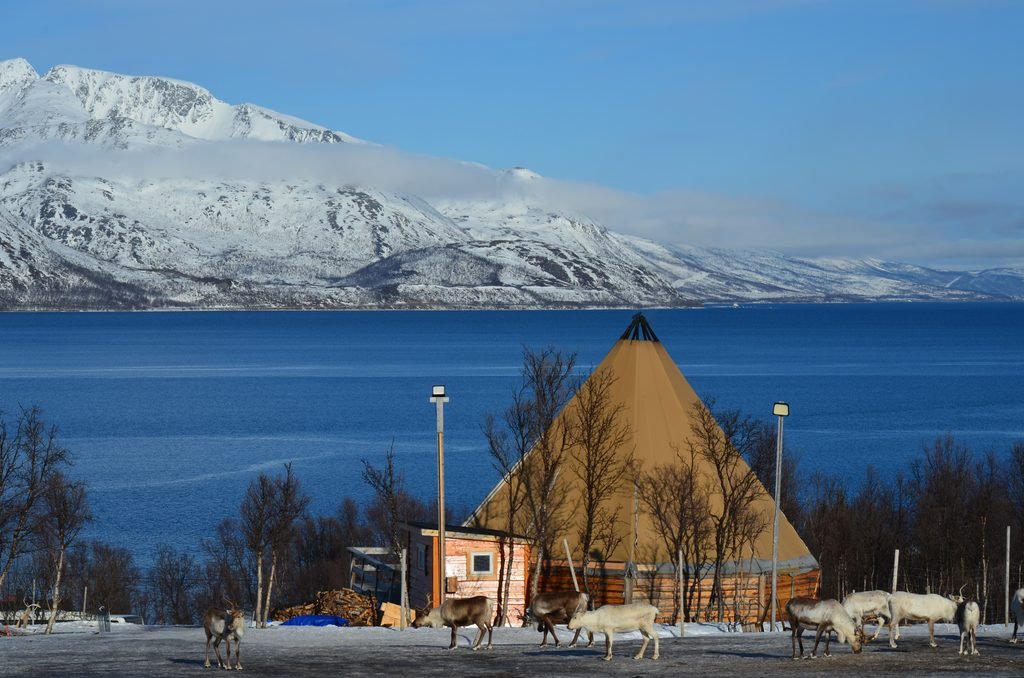
The drive out of Tromsø city center took less than an hour, following the fjord road with snow-covered mountains rising on both sides. As we got closer to the camp, our guide explained the basics of Sámi reindeer herding: how families follow the herds between winter and summer pastures, how each animal is marked with an ear notch specific to the owner, and why reindeer are so central to Sámi identity, food, clothing, and economy.
When we arrived, the herd was already spread out across a huge, snow-and-ice-covered field beside the fjord. I wasn’t expecting the sheer scale of it. There were reindeer as far as I could see, some grazing calmly, others wondering toward the fence line where they clearly recognized the sound of visitors arriving with feed buckets.
Getting the First Photos of the Herd
Before I even picked up a feed bucket, I dropped to a crouch in the snow to get some low-angle shots with my camera. This is one of my favorite pictures from the whole day:
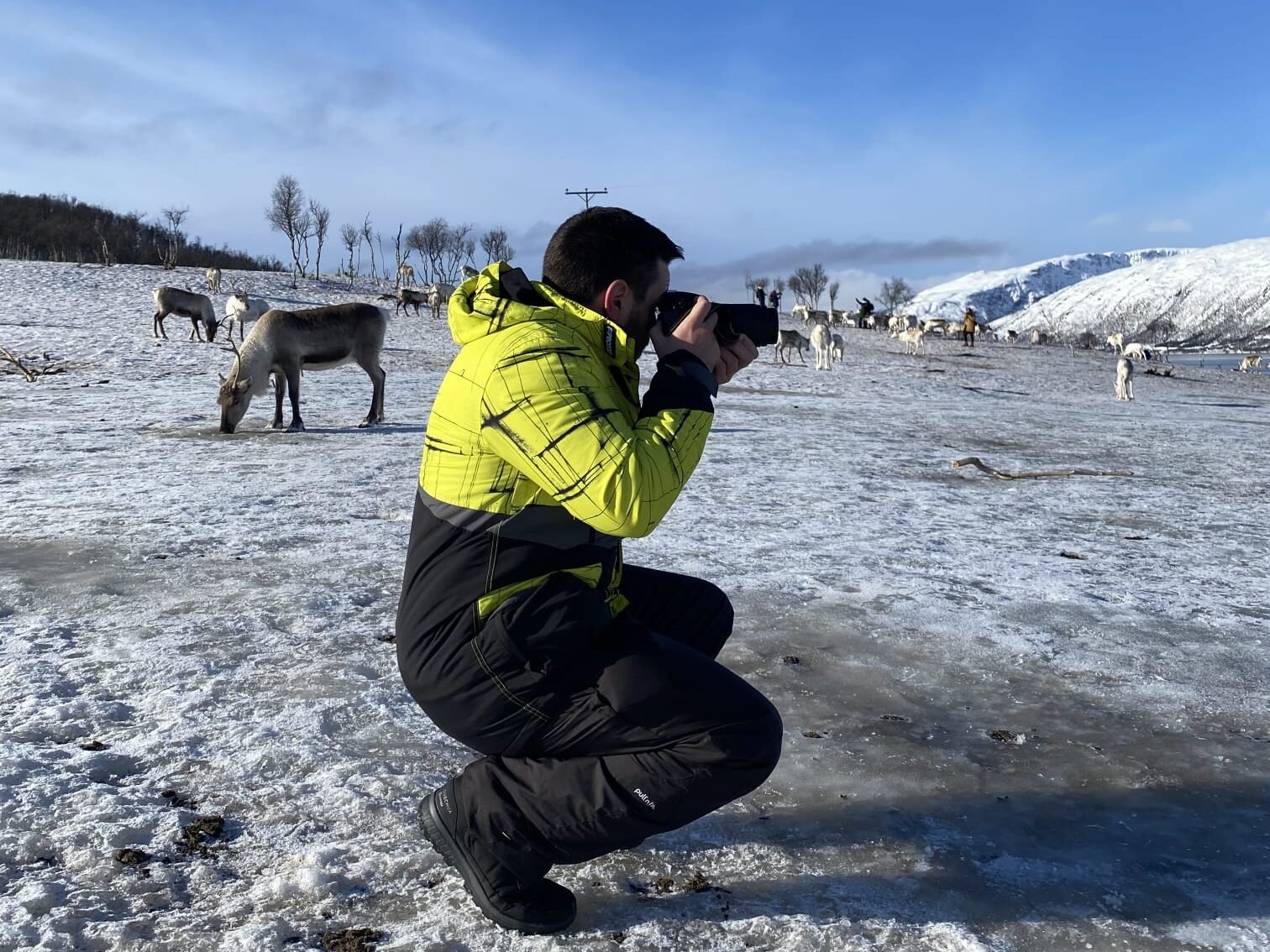
Shooting from a low angle like this let me capture the reindeer at eye level, with the frozen fjord and snow-dusted mountains stretching out behind them. If you’re bringing a camera on your own Reindeer Feeding Experience in Tromsø, I’d genuinely recommend getting down low rather than shooting everything standing up. It makes a huge difference in how alive the photos feel. The ground was icy and wet in patches from melting snow, so I was glad I’d packed waterproof trousers.
Hand-Feeding the Reindeer
This was the part of the day I’d been looking forward to the most, and it did not disappoint. Our Sami guide handed out small buckets of feed pellets, and within seconds the calmer reindeer in the herd started approaching. I hadn’t expected them to be quite so food-motivated and unbothered by people. Some walked right up and dipped their heads straight into the bucket before I’d even lowered it.
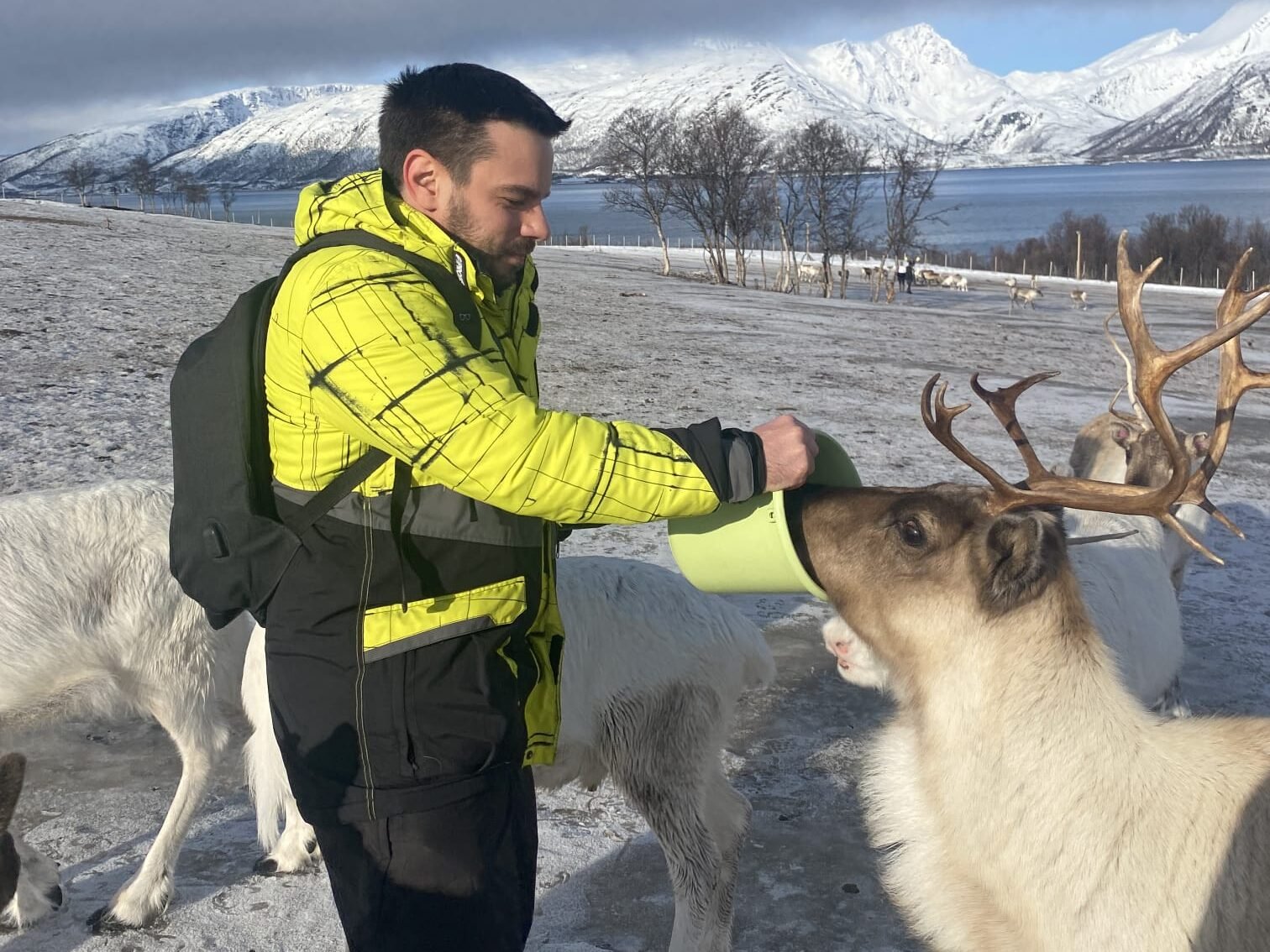
Standing that close to an adult reindeer, you notice details you’d never pick up from a photo online. The warmth of their breath in the cold air, the texture of their velvet-covered antlers (still growing at this point in the season), and just how calm and food-focused they are once they trust you’re holding something worth eating. The guide reminded us not to grab at their antlers or make sudden movements, and honestly there was no need because the reindeer set the pace, not us.
A little further into the feeding session, more of the herd started to close in, and I found myself surrounded on almost every side.
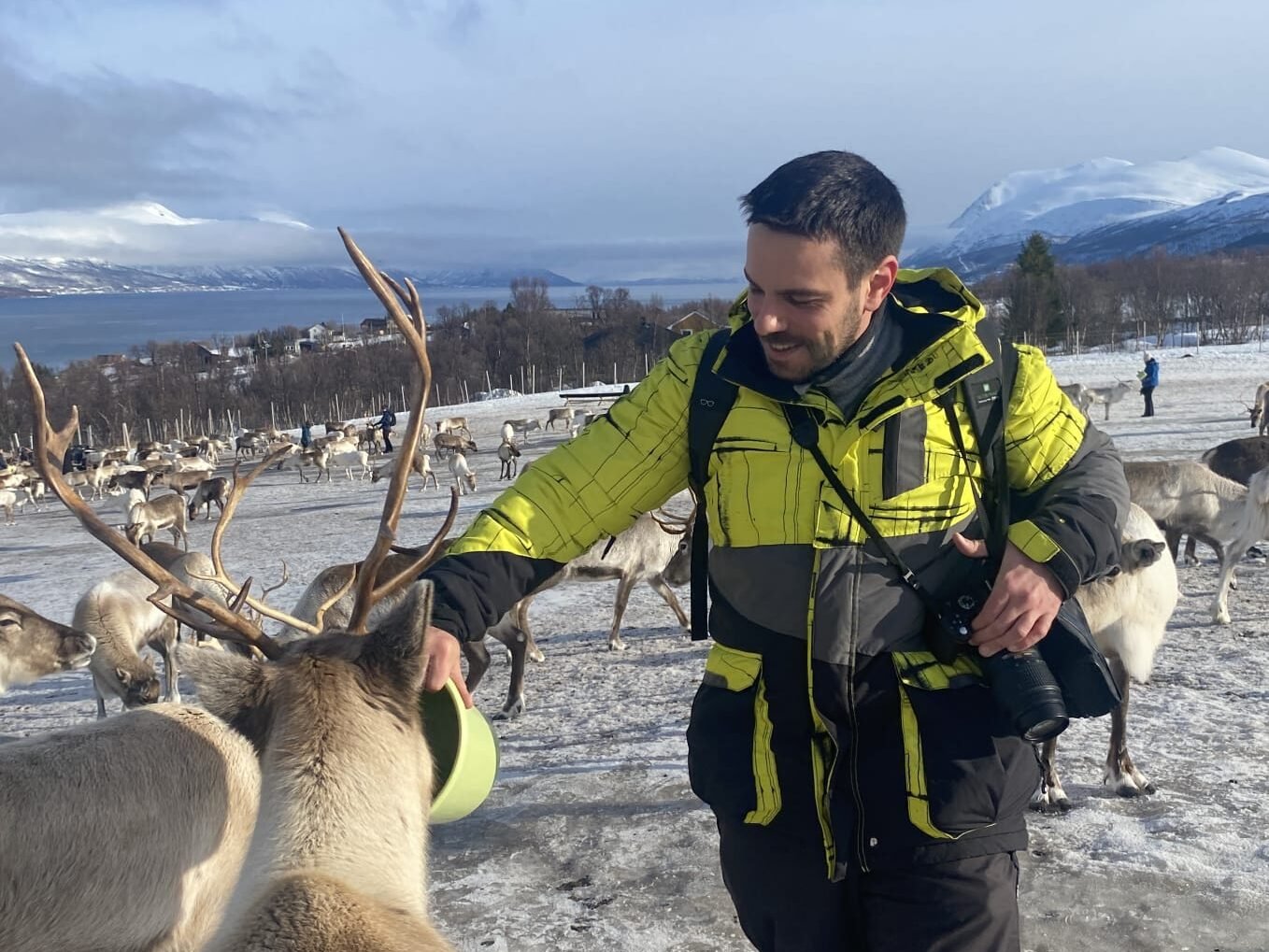
By this point I’d gone through two buckets of feed, and I was laughing at how quickly the reindeer worked out which visitors still had supplies left. The backdrop the entire time, the fjord on one side and the mountains on the other, made it feel less like an organized tour stop and more like being dropped into the middle of an actual working landscape.
Watching the Reindeer Forage and Dig
Not every reindeer in the herd was interested in the feed buckets. Some had wondered off to forage naturally, digging through the snow and old moss with their antlers and hooves in search of lichen, which makes up a huge part of their winter diet. I found this almost more fascinating to watch than the feeding itself.
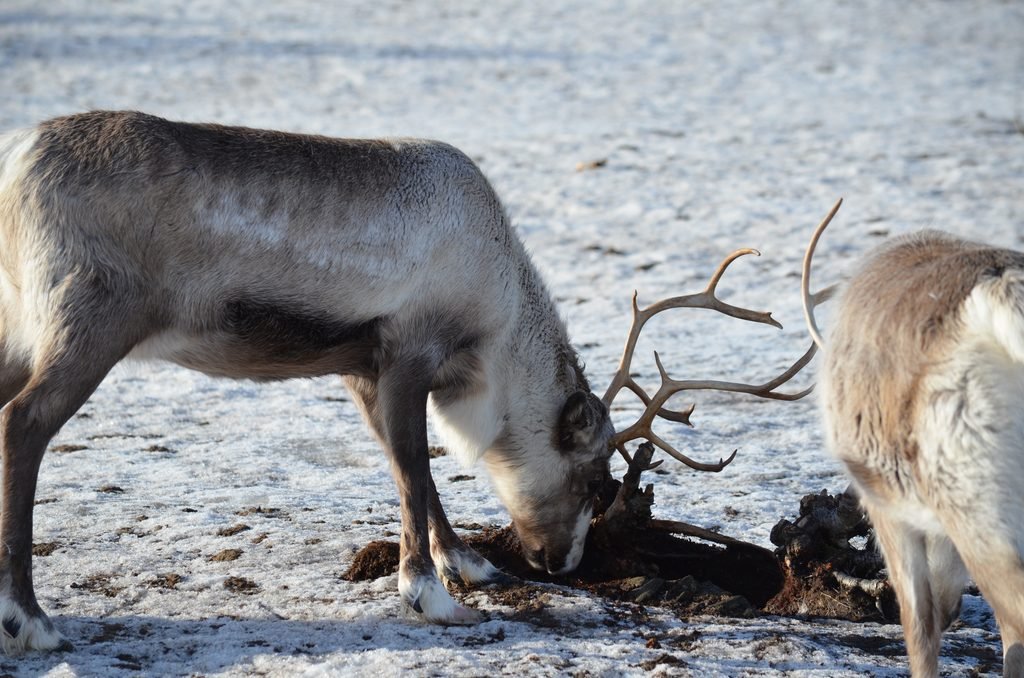
Watching a reindeer bury its whole face into a patch of dug-up snow and moss really drove home how well-adapted these animals are to Arctic conditions. Our guide explained that this natural foraging behavior known as cratering. This is why reindeer herds need such large grazing territories, and why Sámi herders have to move them between pastures throughout the year. It also explained why the ground around the camp was so churned up in patches; this wasn’t a manicured enclosure, it was an active grazing area.
Learning About Sámi Culture and Lunch in the Lavvu
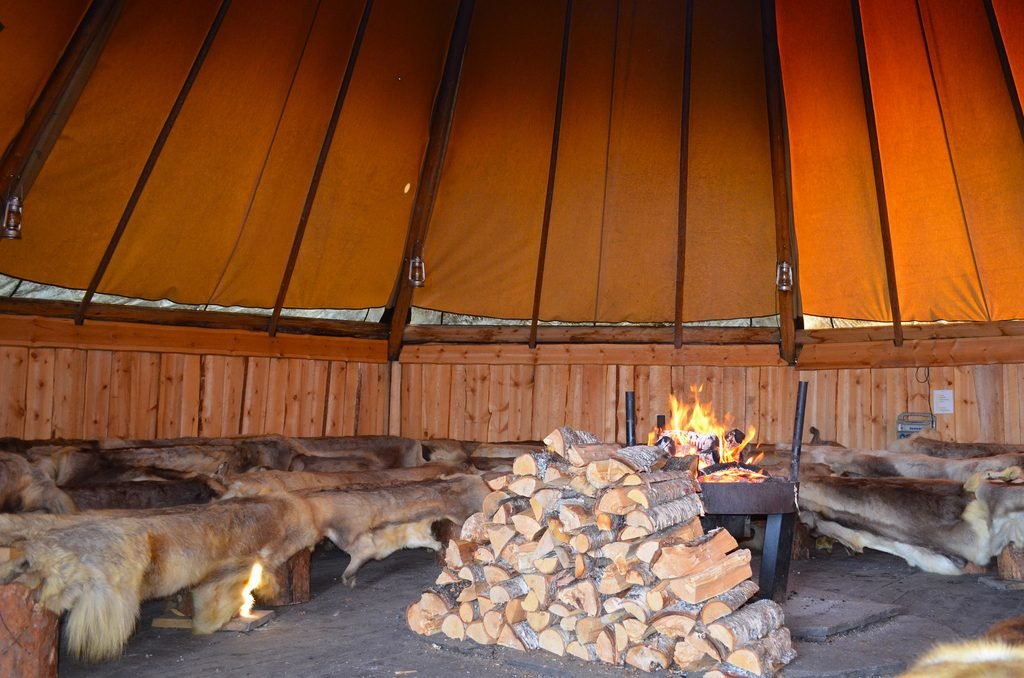
After the feeding portion of the tour wound down, we were led into a lavvu for lunch, which was included as part of the package I’d booked. Sitting around an open fire pit in the middle of the tent, our host served a warm reindeer stew alongside bread and hot berry juice, while talking us through daily life as a Sámi reindeer herder such as the seasonal migrations, the role of snowmobiles and modern tools alongside traditional knowledge, and the cultural significance of reindeer beyond just food and clothing.
This part of the day gave real context to everything I’d just experienced outside. It’s one thing to feed a reindeer for a nice photo; it’s another to sit with someone whose family has managed these herds for generations and hear firsthand how much skill, patience, and seasonal planning goes into it. I’d argue this cultural component is what elevates a reindeer encounter from a novelty activity into something genuinely educational.
Practical Tips for Your Own Reindeer Feeding Experience in Tromsø
If you’re planning to book something similar, here’s what I’d pass along from my own trip:
- Book in advance, especially in peak winter months. Reindeer camps near Tromsø get busy between November and March when demand for northern lights and winter activities peaks.
- Dress in serious layers. Even with a warm base layer, thermal jacket, and waterproof outer shell, I still felt the cold standing still for photos. Insulated, waterproof boots are non-negotiable. The ground alternates between packed snow, ice, and slushy mud near the fence lines.
- Bring a camera with a strap or harness. I kept mine around my neck the whole time, since I needed both hands free for feed buckets and the terrain wasn’t always stable underfoot.
- Don’t rush the feeding. The reindeer will come to you if you stay patient and keep the bucket low and steady rather than waving it around.
- Expect a half-day commitment. Between transport from central Tromsø, the feeding session, and lunch, my tour took roughly four to five hours door to door.
- Ask your guide questions. The Sámi herders and guides running these tours are genuinely knowledgeable, and the experience is far richer if you engage with the cultural side rather than treating it purely as a photo stop.
- Check what’s included before booking. Mine included lunch and the cultural talk, which I think is worth prioritizing over cheaper feeding-only options, since it rounds out the day significantly.
Was It Worth It?
Looking back, my Reindeer Feeding Experience in Tromsø ended up being one of the highlights of the whole trip, ranking right up there with the northern lights tour I did a couple of nights before. What made it stick with me wasn’t just standing next to reindeer, it was the combination of the landscape, the direct contact with a genuinely working herd and the conversation over lunch that put the whole thing into cultural context.
If you’re weighing up whether to add this to your Tromsø itinerary, my honest take is: do it, but choose an operator that combines feeding with a proper cultural component rather than just a quick photo stop.
Final Thoughts
Writing this a few weeks after the trip, what stays with me most is a strange, specific memory. The sound of the herd moving across the snow, somewhere between hooves clicking on ice and antlers softly knocking together. No photo really captures that. But if you’re on the fence about booking a reindeer feeding experience in Tromsø for yourself, I hope this blog gives you a clearer, more honest picture of what to expect than the polished marketing photos usually do; cold hands, muddy boots, warm stew, and a genuinely unforgettable afternoon above the Arctic Circle.



Leave a Reply