

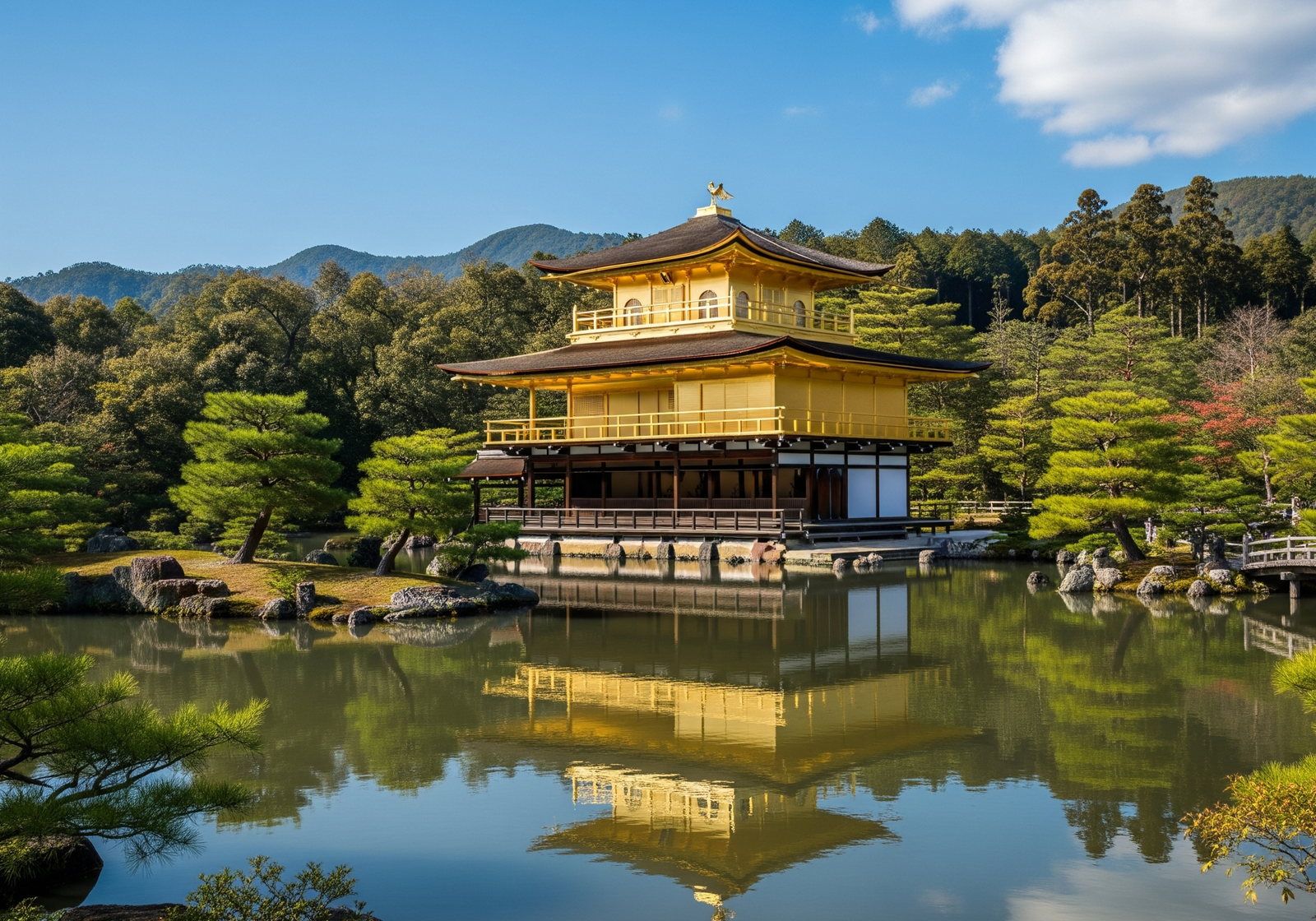
Few places in Kyoto feel as instantly recognizable and emotionally grounding as Kinkaku-ji. Officially known as Rokuon-ji, this Zen Buddhist temple is celebrated for its gold-leaf exterior, serene pond, and meticulously composed gardens. Visiting Kinkaku-ji is not just about seeing a landmark. It is about slowing your pace and letting harmony reveal itself through reflection, symmetry, and silence.
I first arrived early in the morning, just after the gates opened. The air was cool, the path still damp from overnight mist, and the pavilion shimmered softly across the water. That first quiet moment set the tone for the entire visit. Kinkaku-ji has a way of calming the mind before you even realize it is happening.
The History Behind the Golden Pavilion Kinkaku-ji
Kinkaku-ji was originally built in the late 14th century as a retirement villa for Ashikaga Yoshimitsu, a powerful shogun who ruled during Japan’s Muromachi period. After his death, the villa was converted into a Zen temple in accordance with his wishes. The structure you see today is a faithful reconstruction, as the original building was destroyed by fire in the 20th century.
What makes Kinkaku-ji historically fascinating is how it reflects the aesthetics of its era. The three stories of the pavilion each represent a different architectural style. The first floor follows the style of aristocratic residences, the second reflects samurai design, and the third embodies Zen temple architecture. This layered symbolism mirrors the spiritual journey from worldly life to enlightenment.
As I walked the garden paths, I found it striking how history does not feel distant here. Instead, it feels preserved in balance, as if time itself has agreed to move gently around the pavilion.
Why the Pavilion Is Covered in Gold
The upper two floors of Kinkaku-ji are covered in gold leaf, which is both visually stunning and symbolically rich. In Zen Buddhism, gold represents purification and the removal of worldly negativity. The shimmering surface is meant to reflect light outward, reinforcing the idea of spiritual clarity.
On a sunny day, the gold glows intensely against the green pines and blue sky. On cloudy days, it feels softer and more contemplative. I visited once in winter, when a light layer of snow rested on the roof. The contrast between white snow, dark water, and golden walls was unforgettable.
No matter the season, the pavilion never feels excessive. Instead, the gold feels restrained and intentional, perfectly balanced within its natural surroundings.
The Gardens and Mirror Pond Experience
Kinkaku-ji is surrounded by a traditional strolling garden designed to be viewed from specific angles as you walk. The central pond, often called Mirror Pond, reflects the pavilion almost perfectly on calm days. Small islands, carefully placed stones, and sculpted pine trees frame the water and guide your eye naturally toward the temple.
Walking the path clockwise, you encounter a series of viewpoints that feel almost cinematic. Each turn offers a slightly different composition, as if the garden itself is leading you through a visual meditation. I found myself stopping often, not to take photos, but simply to observe the quiet interaction between architecture and nature.
The garden is not meant to be rushed. The more slowly you move, the more the details reveal themselves. Ripples in the water, the sound of gravel beneath your feet, and the subtle shift of light all become part of the experience.
What to Expect During Your Visit to Kinkaku-ji
Kinkaku-ji operates as a one-way walking route, guiding visitors through the garden before exiting near a small teahouse and souvenir area. There is no interior access to the pavilion itself, which helps preserve its structure and maintain the calm atmosphere.
Expect crowds, especially during peak travel seasons like spring and autumn. Even so, the space rarely feels overwhelming. The flow of the path keeps movement steady, and there are moments where the noise fades, and you are left with stillness again.
I recommend visiting early in the morning or later in the afternoon for the most peaceful experience. Arriving early allowed me to enjoy the reflections before the wind picked up and the crowd thickened.
Practical Tips for Visiting Kinkaku-ji
- Best time to visit: Early morning for fewer crowds and softer light
- Entry fee: Paid admission, usually around a few hundred yen
- Time needed: About 45 minutes to one hour
- Getting there: Bus access from central Kyoto is the most common option
- What to wear: Comfortable walking shoes, as the garden path includes gravel and steps
Photography is allowed, but try not to view the entire visit through a lens. Some of the most meaningful moments are the ones you do not capture.
Personal Reflections from Malik
What stayed with me after leaving Kinkaku-ji was not just the image of gold on water. It was the sense of balance. Nothing here feels accidental. Every tree, stone, and reflection works together to create calm without asking for attention.
On my walk back toward the exit, I paused at the teahouse and drank a simple cup of matcha. Sitting there, surrounded by quiet conversations and rustling leaves, I understood why Kinkaku-ji continues to resonate with travelers from around the world. It does not impress loudly. It invites quietly.
Final Thoughts
Kinkaku-ji is more than one of Kyoto’s most famous landmarks. It is a lesson in harmony, restraint, and the power of thoughtful design. Whether you are visiting Kyoto for the first time or returning for a deeper exploration, the Golden Pavilion deserves a place on your itinerary.
Take your time here. Let the reflections settle. Kinkaku-ji has a way of staying with you long after you leave its gates.










Leave a Reply